SAP Retail Landscape – January 2026: Latest & Greatest (Post-NRF View)
As of January 2026, the SAP Retail ecosystem is undergoing a clear transition from traditional ERP-centric retail operations to an AI-first, data-driven retail operating model. This shift was strongly reinforced at NRF 2026: Retail’s Big Show, where the industry consensus was that retail transformation is no longer about “going digital,” but about making retail systems intelligent, predictive, and autonomous. Retailers are now under pressure to deliver profitability, resilience, and personalized customer experiences simultaneously—and SAP is positioning itself as the core platform enabling this balance.
AI Is Now Embedded Into the Core of SAP Retail
One of the most important takeaways from NRF 2026 is that AI is no longer a side capability in SAP Retail—it is becoming part of the system’s DNA. SAP is embedding AI across planning, merchandising, supply chain, pricing, and customer engagement workflows rather than offering it as bolt-on analytics. Capabilities such as demand forecasting, inventory optimization, and promotion effectiveness are increasingly AI-driven and near real-time, allowing retailers to react faster to demand volatility, weather disruptions, and regional buying patterns.
SAP’s AI strategy centers on making insights actionable inside business processes, not dashboards. Retail users—merchandisers, planners, and store operations teams—are expected to interact with insights directly within SAP applications, rather than relying on separate BI tools or offline analysis.
Rise of Joule and Natural-Language Retail Operations
A major highlight at NRF was SAP’s push around SAP Joule, its generative AI copilot. In the retail context, Joule is positioned as a decision-support layer that allows users to ask natural-language questions like “Why are we overstocked on this category in the Northeast?” or “What assortment changes should we make for the next promotion?” and receive context-aware, data-backed responses.
This represents a fundamental change in how SAP Retail users interact with the system. Instead of navigating complex transaction codes or multiple apps, business users can now converse with the system, accelerating decision-making and reducing dependency on technical teams. At NRF, SAP made it clear that Joule will increasingly influence merchandising, supply chain planning, and store operations, not just finance or analytics.
Unified Retail Data Is the Real Differentiator
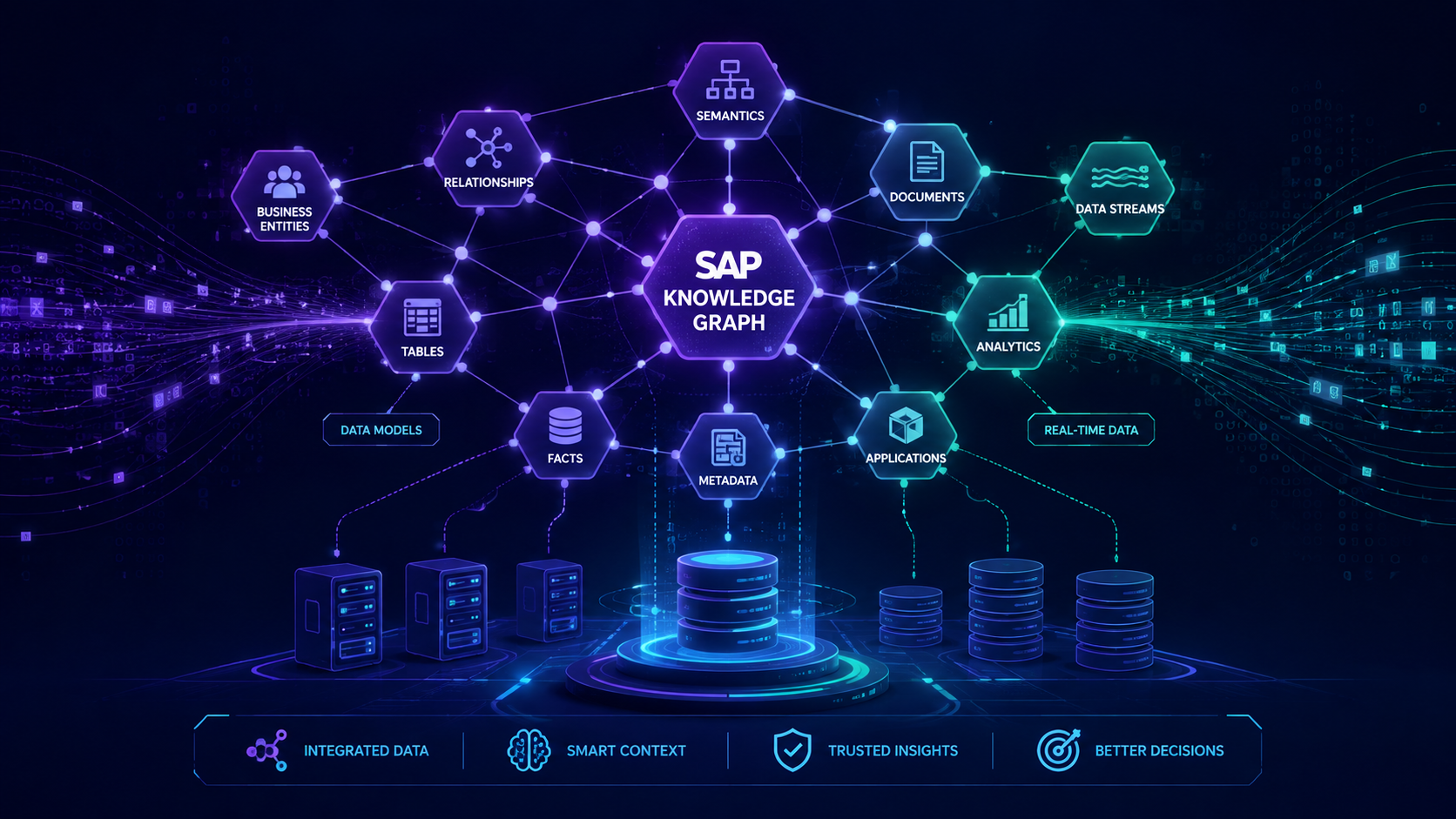
Another dominant theme in 2026 is the move toward unified retail data models. Retailers have historically struggled with fragmented data across POS, e-commerce, supply chain, and loyalty platforms. SAP is now strongly promoting a harmonized data foundation—often discussed in the context of SAP’s evolving data cloud strategy—where transactional and analytical data coexist in near real time.
For SAP Retail customers, this means better alignment between sales data, inventory positions, supplier commitments, and customer behavior. The emphasis is shifting from batch-based reporting to continuous, event-driven insights, enabling faster reactions to stockouts, markdown risks, and fulfillment disruptions. NRF discussions showed that retailers who have cracked data unification are significantly ahead in both profitability and customer experience.
S/4HANA Retail Becomes the Non-Negotiable Core
From a system perspective, SAP S/4HANA Retail is now firmly established as the mandatory foundation for future-ready retailers. At NRF, it was clear that SAP ECC-based retail landscapes are considered end-of-life from an innovation standpoint. All new AI, planning, and omnichannel capabilities assume S/4HANA Retail as the digital core.
Retailers are increasingly adopting either Brownfield conversions with selective innovation or RISE with SAP-based transformations, depending on their complexity and global footprint. The focus is not just technical migration, but process simplification, clean-core principles, and readiness for AI-driven extensions via SAP BTP.
Execution Over Experimentation
A noticeable change in tone at NRF 2026 was that retailers are done with pilots that never scale. The industry is now focused on execution, ROI, and measurable outcomes. Retail leaders repeatedly emphasized reducing stockouts, lowering inventory holding costs, improving promotion accuracy, and enhancing customer loyalty—rather than showcasing flashy tech demos.
SAP echoed this sentiment by positioning its retail portfolio around end-to-end process orchestration—connecting demand sensing, supply planning, fulfillment, and customer engagement into a single intelligent flow. AI is being evaluated not by novelty, but by how effectively it improves margins and operational resilience.
What This Means Going Forward
In summary, as of January 2026, the SAP Retail world is defined by five clear realities:
- AI is embedded, not optional—and increasingly agent-driven.
- Natural-language interaction (via Joule) is reshaping user experience.
- Unified, real-time retail data is a competitive advantage.
- S/4HANA Retail is the only future-proof core.
- Retailers are prioritizing execution, scale, and ROI over experimentation.
For SAP Retail practitioners, system integrators, and retail IT leaders, the message post-NRF is clear: the next phase of retail transformation is about intelligent operations, not just digital transformation.