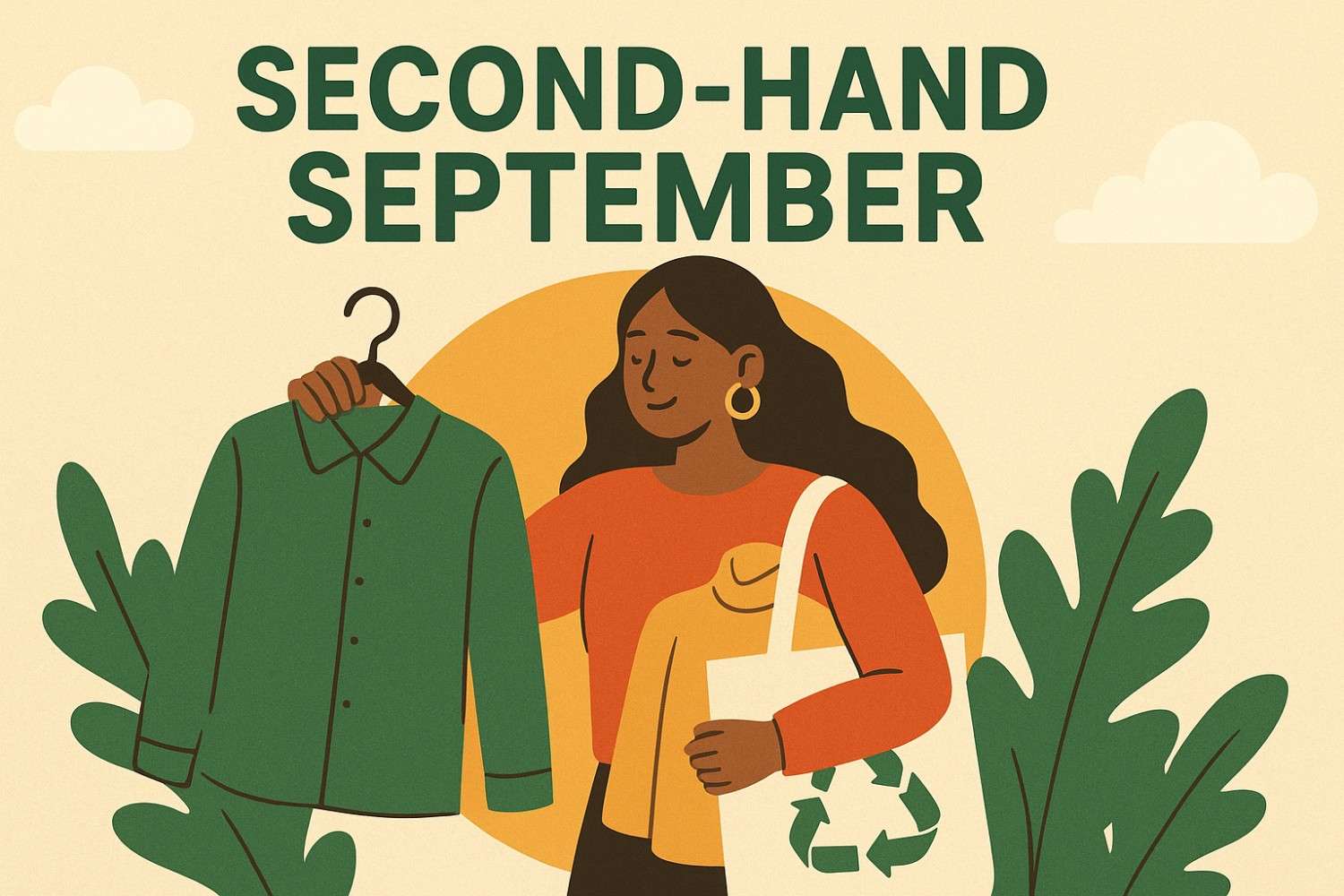
Second-Hand September: A Step Toward Sustainable Fashion
Buy less, choose well, make it last.” – Vivienne Westwood
September has taken on a new meaning over the past few years. With the rise of Second-Hand September, what was once an ordinary month on the calendar has become a movement that asks us to pause and reflect on how we consume fashion. At its heart, this campaign is about more than thrift shopping, it’s about rethinking our relationship with clothing, our planet, and even our personal style.
Fashion’s Hidden Footprint
The fashion industry produces over 100 billion garments every year, but shockingly, the majority end up in landfills or burned in incinerators within just a few years of being made. According to the Geneva Environment Network, fashion is responsible for 2–8% of global carbon emissions and consumes enormous amounts of water and energy in its production process. Every time we purchase something new, it comes at a cost much bigger than the price tag.
Choosing second-hand is one of the simplest yet most powerful steps we can take to break this cycle. Every pre-loved piece we wear keeps fabric out of landfills, saves resources, and reduces the demand for energy-intensive production. Imagine if everyone committed to buying even one or two second-hand items instead of new each month, the environmental savings would be enormous.
Sustainability in Practice
Throughout the world, both consumers and brands are embracing this shift. In the Netherlands, MUD Jeans pioneered a “lease a jean” model where customers can rent a pair of jeans, return them when worn out, and the brand then recycles the fibers into new denim. This approach extends garment life while closing the loop in production.
On the creative side, designer Priya Ahluwalia is gaining recognition for collections built from deadstock fabrics and vintage textiles. Her work proves that second-hand and upcycled materials are not just practical but can also be elevated into high fashion with cultural meaning.
Even luxury labels are experimenting with resale. Platforms like The RealReal and Vestiaire Collective have become mainstream destinations where designer pieces find second lives. This not only reduces waste but also makes high-end fashion accessible to more people.
Closer to home, think of community-driven thrift shops, college clothing swaps, or online resale apps. Many young people around the world, for example, are turning to Instagram thrift stores to sell pre-loved clothes. These small businesses keep garments in circulation while fostering creativity and affordability.
A Movement With Impact
The campaign was initiated by Oxfam to get individuals to say “no” to new clothing for 30 days and instead choose pre-loved clothes. It might sound simple, the impact is profound. If every individual in the UK shopped second-hand for just one month, it would be equivalent to carbon emissions from flying around the world 13,000 times (Oxfam, 2019). Numbers like these show how collective action can turn into meaningful change.
It’s also an opportunity to rediscover style. Shopping second-hand often leads to unique finds, pieces you won’t see on every high street mannequin. It’s fashion with a story: a jacket that lived a life before you, or a dress that might remind you of your grandmother’s era. In a way, each garment becomes a conversation between past and present.
The Roadblocks We Face
Of course, second-hand fashion is not without challenges. Some consumers still consider pre-loved clothing as less desirable, or concerned about its quality and hygiene. Others fall into the trap of over-consuming thrift items simply because they are cheap, which defeats the purpose. And in certain regions, massive imports of second-hand clothing can disrupt local textile industries.
That’s why awareness and balance matter. It’s not just about purchasing second-hand for the sake of it, it’s about mindful consumption, selecting pieces you love, repairing them when needed, and wearing them for as long as possible.
How You Can Join In
Here’s a simple challenge: before you purchase anything new this month, ask yourself Can I find it second-hand? Could you swap it with a friend, check a thrift store, or browse an online marketplace? Maybe you already own something similar and just need to style it differently.
Try it once, and you’ll see how refreshing it feels to break free from the constant cycle of fast fashion. You may even stumble upon a piece that becomes your favorite only because it’s one of a kind.
Sustainable fashion isn’t about perfection-it’s about progress. By embracing Second-Hand September, we’re not only making an eco-friendly choice, we’re joining a movement that values creativity, resourcefulness, and responsibility. Fashion has always been about expression, but now it’s also about ethics and survival.
This month, let your wardrobe tell a different story. One that says: I care about what I wear, and I care about the world it comes from.
Reference
- https://www.genevaenvironmentnetwork.org/resources/updates/sustainable-fashion/?utm_source
- https://www.oxfam.org.uk/get-involved/second-hand-september/
- https://www.oneplanet.capital/insights/the-rise-and-rise-of-second-hand-fashion?utm_source
- https://pirg.org/articles/10-reasons-to-embrace-secondhand-clothing/?utm_source