Sustainability Spotlight – From Gadgets to Groceries: The Hidden Cost of Waste
“The greatest threat to our planet is the belief that someone else will save it.” — Robert Swan
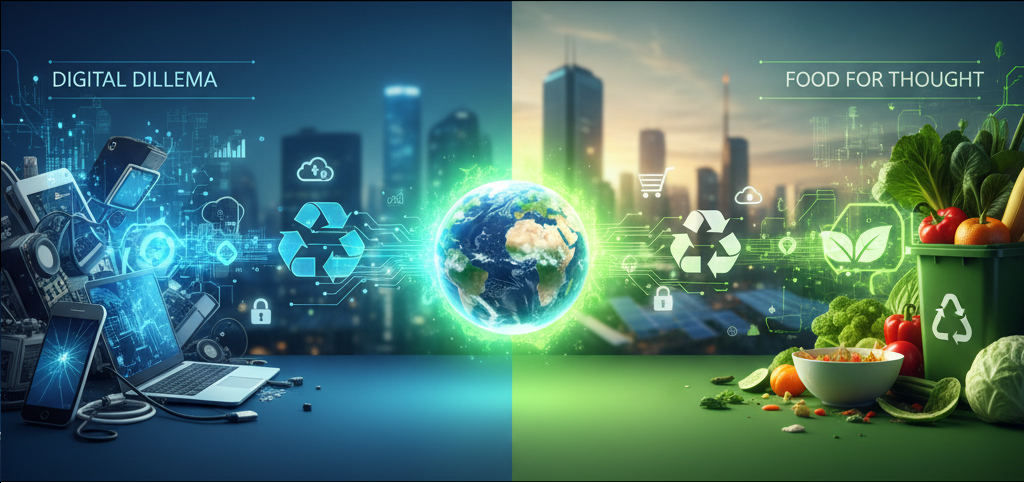
Every small action we take (or don’t take) shapes the future of our planet. From the forgotten phone in your drawer to the uneaten meal on your plate, waste comes in many forms — and both carry a heavy environmental cost. This October, as the world observes International E-Waste Day (October 14) and World Food Day (October 16), it’s time to pause and reflect on how our habits, digital or dietary, affect the Earth we call home.
The Digital Dilemma: E-Waste on the Rise
Have you ever looked at your old phone or laptop gathering dust and thought, “Maybe I’ll use it someday”? You’re not alone. Millions of “tech graveyards” across the world silently contribute to one of the fastest-growing waste problems on the planet: electronic waste.
In 2023, the world generated over 62 million tonnes of e-waste — equivalent to discarding 1,000 laptops every second. Yet, only 20% of it was formally recycled. The rest often ends up in landfills or informal recycling sites, releasing toxic substances like mercury, lead, and cadmium into our soil, air, and water.
India is among the top five e-waste generators globally, producing over 1.6 million tonnes annually. Encouragingly, through E-Waste (Management) Rules, 2022, producers are now being held accountable via Extended Producer Responsibility (EPR) mandates. However, real change begins with each one of us — repairing, reusing, and responsibly recycling the gadgets we no longer need.
Recycling isn’t just about disposal; it’s about resource recovery. One million recycled mobile phones can recover 24 kg of gold, 250 kg of silver, and 9,000 kg of copper — resources that otherwise require extensive mining and energy use.
Food for Thought: The Sustainability of What We Eat
Just two days after International E-Waste Day, World Food Day reminds us of another global imbalance — food waste. While 783 million people still suffer from chronic hunger, nearly one-third of all food produced globally is wasted. This waste contributes to 8–10% of global greenhouse gas emissions and represents billions of dollars in lost resources.
The connection between food and sustainability runs deep. Every uneaten meal wastes not just the food itself but also the water, energy, and land that went into producing it. For example, producing just 1 kg of beef requires around 15,000 litres of water, while vegetables may need less than 500. Choosing local, seasonal, and plant-based food options can drastically reduce environmental impact.
Small Changes, Big Impact
Whether it’s your old smartphone or leftovers from last night’s dinner, waste reduction starts with mindfulness. Here’s how each of us can contribute:
- Repair before you replace — extend the life of your gadgets and appliances.
- Recycle responsibly — locate certified e-waste recyclers in your city.
- Plan your meals — buy what you need, store food properly, and compost when possible.
- Donate — give working electronics and surplus food to those in need.
- Educate — awareness is the first step to action.
A Sustainable Future Is in Our Hands
Both International E-Waste Day and World Food Day share the same essence: responsibility and regeneration. In a world driven by upgrades and convenience, our challenge is to pause, rethink, and act consciously.
Sustainability isn’t about perfection — it’s about progress. Each phone recycled, each meal saved, and each mindful choice brings us one step closer to a cleaner, fairer, and more sustainable planet.
“What we waste today decides the world we live in tomorrow.”